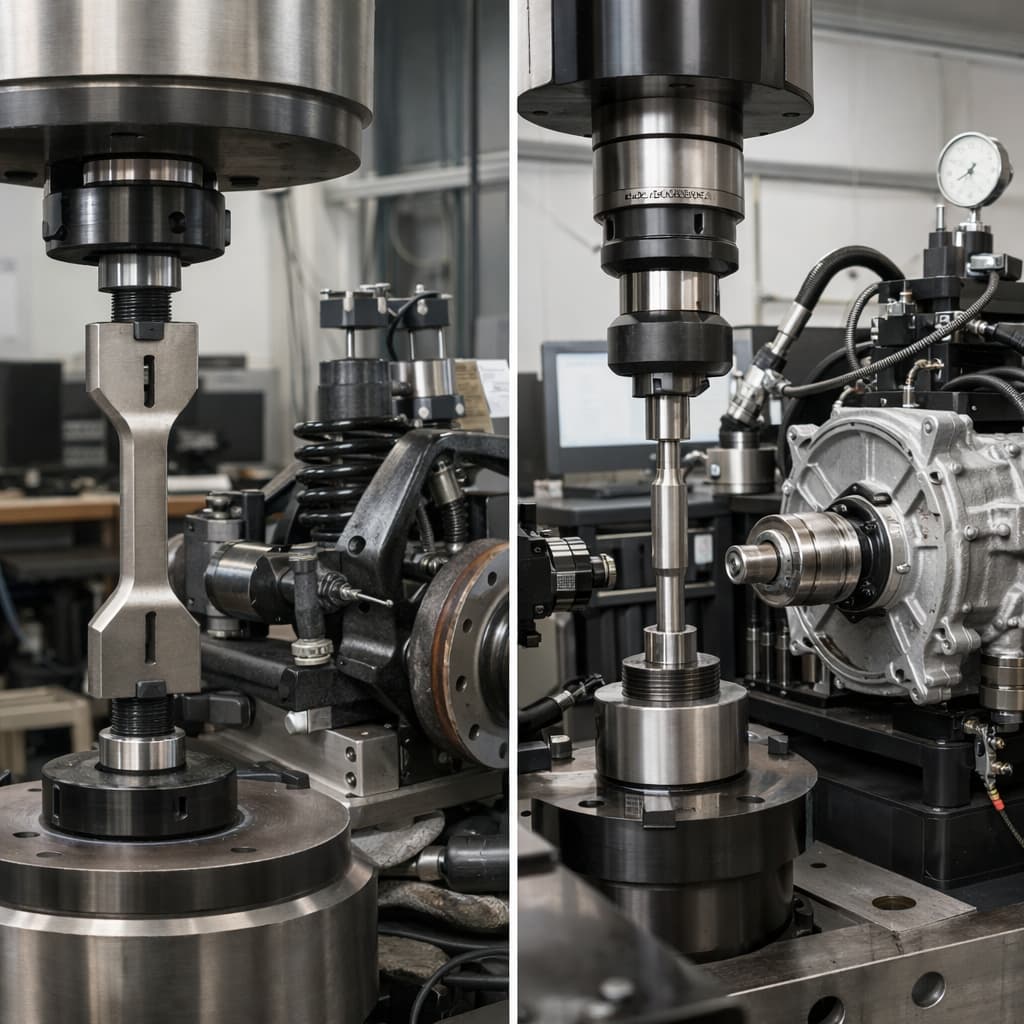

كما أن أداء التأثير غالباً ما يكون مبسطاً بشكل مفرط. تُستخدم قيم تأثير إيزود أو شاربي ذات الشقوق غالبًا لـ يمثل الصلابةومع ذلك، فإن هذه الاختبارات حساسة للغاية لشكل الشق وأبعاد العينة. في الأجزاء المصبوبة الحقيقية، تكون خطوط اللحام واتجاه الألياف وتركيزات الإجهاد الموضعية أكثر تعقيدًا بكثير من الشقوق القياسية. تُظهر الخبرة الهندسية أن ارتفاع رقم الصدمة لا يُترجم بالضرورة إلى مقاومة موثوقة للسقوط أو متانة جيدة في مواجهة الاهتزازات.
من منظور التحقق الهندسي، تتحول عمليات اختيار المواد الناضجة من المقارنات أحادية القيمة إلى رسم خرائط ظروف التشغيل. تُواءم هذه المقاربة بين درجات الحرارة والرطوبة وظروف التشغيل الفعلية وظروف الاختبار المقابلة، وتشمل عند الضرورة اختبارات ثانوية أو تجارب تشكيل تجريبية. ورغم أن هذه الطريقة تزيد من الجهد الأولي، إلا أنها تُقلل بشكل كبير من المخاطر النظامية أثناء الإنتاج الضخم.