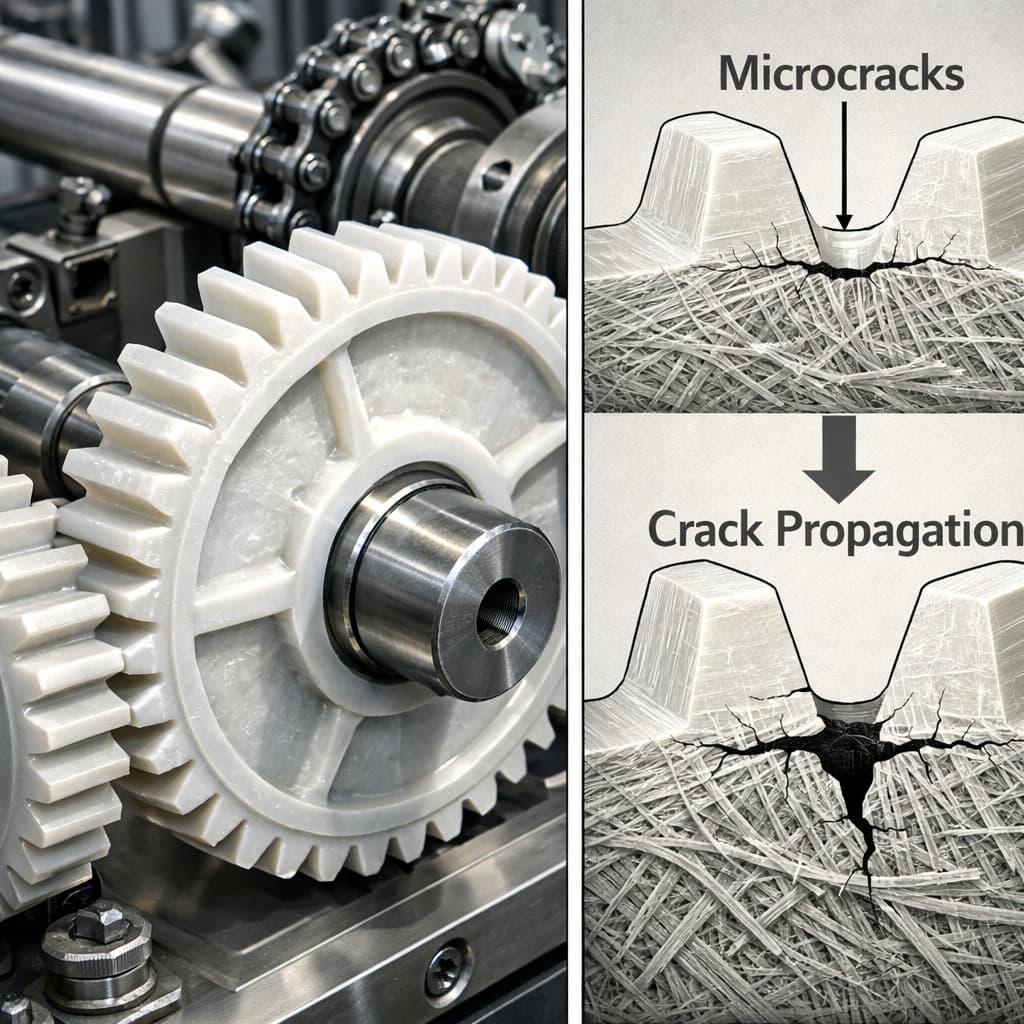

في العديد من عمليات التصميم الميكانيكي، يبدأ المهندسون عادةً اختيار المواد بفحص قوة الشد أو قوة الانحناء المذكورة في جداول البيانات الفنية. إذا بدت قيم القوة كافية لتلبية حمل التصميم، يُعتبر الهيكل آمنًا في أغلب الأحيان. ومع ذلك، في أنظمة النقل الحقيقية، لا تحدث العديد من حالات الفشل بسبب التحميل الزائد الفوري، ولكن بسبب الإجهاد الناتج عن التحميل الدوري طويل الأمد. تعمل مكونات مثل التروس والبطانات والبكرات والوصلات وموجهات السلسلة تحت ضغط متكرر مستمر، مما يعني أن الاعتماد فقط على القوة الثابتة يمكن أن يؤدي بسهولة إلى افتراضات خاطئة حول عمر الخدمة.
هذا سوء الفهم شائع بشكل خاص عندما تُستخدم مواد النايلون المعدلة في الهياكل الميكانيكية خفيفة الوزن. قد يختار المصممون PA6 GF30 أو PA66 GF30 كبدائل معدنية. قد تُظهر ورقة البيانات قيم قوة شد تتجاوز 150 ميجا باسكال، وهو ما يبدو كافيًا للمتطلبات الهيكلية. مع ذلك، عمليًا، تبدأ بعض التروس أو البكرات بالتشقق بعد عدة أشهر من التشغيل. غالبًا ما يكشف التحقيق أن السبب الجذري ليس عدم كفاية القوة، بل تجاهل حدود الإجهاد.
من منظور المواد، تمثل المقاومة الساكنة أقصى حمل يمكن أن تتحمله المادة تحت تأثير قوة واحدة. أما سلوك الإجهاد، فيصف التراكم التدريجي للتلف المجهري تحت تأثير مئات الآلاف أو ملايين دورات التحميل. في مواد البولي أميد، يمكن أن يؤدي الإجهاد المتكرر إلى توليد تشققات دقيقة تدريجياً داخل التركيب الجزيئي. غالباً ما تبدأ هذه الشقوق عند واجهات الألياف، أو حدود الحشو، أو مناطق تركيز الإجهاد، وتنتشر في النهاية حتى يحدث الفشل.
في إحدى الحالات النموذجية، استبدلت شركة مصنعة لمعدات الأتمتة تروسًا من الألومنيوم بتروس من مادة PA66 GF30. أشارت الحسابات الثابتة إلى معامل أمان يزيد عن 3. ومع ذلك، بعد خمسة أشهر من التشغيل، حدث كسر في جذر الترس. وكشفت اختبارات الإجهاد اللاحقة أنه تحت 10⁶ دورة تحميل، كانت مقاومة الإجهاد حوالي 30-40% فقط من مقاومة الشد الثابتة. وعند إعادة حساب التصميم بناءً على حدود الإجهاد، انخفض معامل الأمان إلى ما يقارب 1.2، مما يشير إلى ارتفاع خطر الفشل.
تلعب الظروف البيئية أيضاً دوراً حاسماً. مواد النايلون تتميز هذه المواد بخاصية امتصاص الرطوبة، مما يؤثر على معامل المرونة وسلوك الإجهاد. فارتفاع الرطوبة غالباً ما يزيد من المتانة ولكنه يقلل من مقاومة الإجهاد. بالنسبة للتروس عالية السرعة أو أقفاص المحامل الدوارة باستمرار، يمكن أن تؤدي هذه التغيرات إلى تقصير عمر التشغيل بشكل ملحوظ.