الألياف الزجاجية مقابل النايلون المقوى بألياف الكربون: مفاضلة شاملة بين التكلفة والقوة وخفة الوزن 01
الاختيار بين الألياف الزجاجية (GF) و النايلون المعدل المقوى بألياف الكربون (CF) في نهاية المطاف، هي مقايضة تكتيكية بين المتطلبات الميكانيكية وتكلفة المكونات طوال عمرها الافتراضي. يواجه المهندسون والمتخصصون في المشتريات احتكاكاً مستمراً: تحقيق أقصى قدر من السلامة الميكانيكية مع تحقيق الوزن المستهدف دون تجاوز حدود تكلفة الوحدة. باعتبارها الوسائط الأساسية لتقوية البولي أميدات، تُظهر الألياف الزجاجية وألياف الكربون خصائص ميكانيكية دقيقة فريدة تُحدد الأداء الكلي النهائي. لا تزال الألياف الزجاجية الخيار الأمثل للمكونات الهيكلية نظرًا لكفاءتها العالية من حيث التكلفة وزيادة قوتها الموثوقة. في المقابل، توفر ألياف الكربون قوة نوعية فائقة، وكثافة منخفضة، وخصائص احتكاكية وكهروستاتيكية فريدة، مما يجعلها لا غنى عنها في تطبيقات التخفيف من الوزن والدقة العالية. يتطلب اختيار الأنسب ربط المعايير الميكانيكية بالإجهاد التشغيلي، والظروف البيئية، وتكاليف التصنيع الإجمالية.
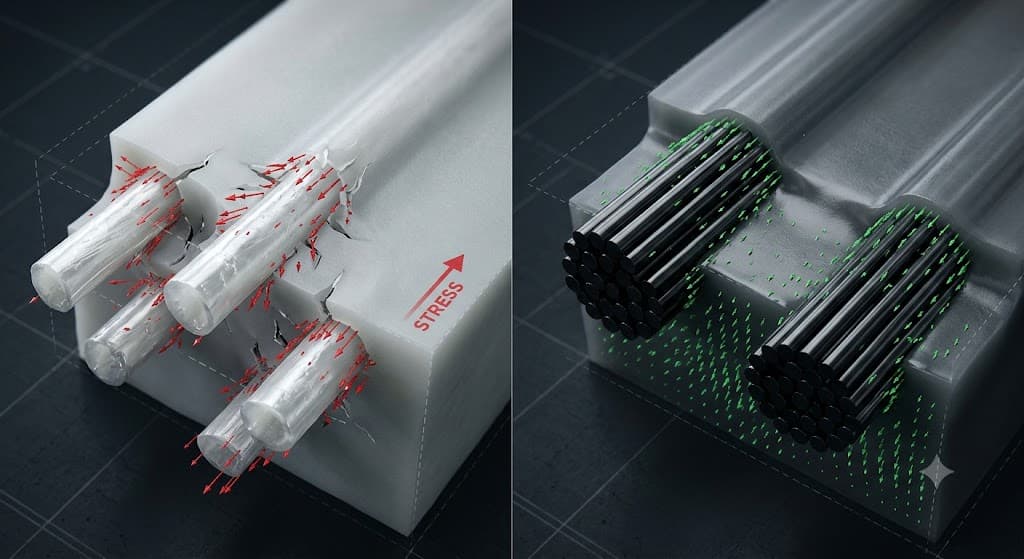
من منظور البنية المجهرية، تعمل الألياف الزجاجية والألياف الكربونية على تعديل مصفوفات النايلون من خلال واجهات ميكانيكية متميزة. تعمل الألياف الزجاجية على تحسين معامل الشد والانحناء من خلال نقل إجهاد القص بين الأسطح. يؤدي استخدام بولي أميد 66 مدعم بنسبة 30% من الألياف الزجاجية إلى رفع قوة الشد إلى نطاق 160-180 ميجا باسكال، مع تحسين كبير في مقاومة الزحف ودرجة حرارة الانحراف الحراري تحت الحمل. مع ذلك، فإن كثافة الزجاج الخام (حوالي 2.54 جم/سم³) ترفع كثافة المركب إلى حوالي 1.35-1.45 جم/سم³، مما يُضيف كتلة غير مرغوب فيها في التجميعات الفرعية ذات الوزن الحرج. في المقابل، ألياف الكربون تُحافظ كثافة الألياف (حوالي 1.75-1.80 غ/سم³) على وزن المركب النهائي أخف (1.25-1.35 غ/سم³). والأهم من ذلك، أن ألياف الكربون تُوفر معامل مرونة نوعي فائق: إذ يتجاوز معامل الشد لمركب PA66 المُعزز بنسبة 30% من ألياف الكربون 220-250 ميجا باسكال بانتظام، مع وصول معامل الانحناء إلى 1.5 ضعف معامل الانحناء للبدائل المُدعمة بالألياف الزجاجية. يُتيح هذا الأداء ترقيق الجدران الهيكلية، مما يُحقق تأثيرًا تراكميًا لتخفيف الوزن من خلال الجمع بين تقليل كثافة المواد والتحسين الهندسي.